
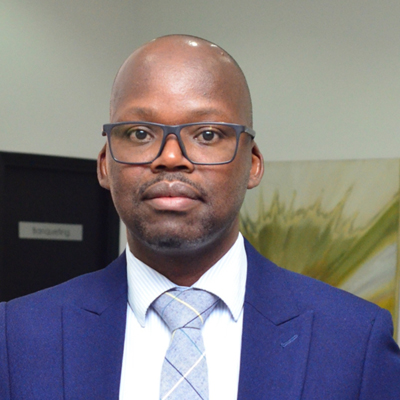
Dr. Save Kumwenda
Head of Department – Public and Environmental Health Sciences
Associate Professor – Environmental Health
- PhD in Public Health (2019), Kamuzu University of Health Sciences (KUHeS), formerly, University of Malawi, College of Medicine
- Master of Public Health (2009), Kamuzu University of Health Sciences (KUHeS), formerly, University of Malawi, College of Medicine
- BSc in Environmental Health (2003), Malawi University of Business and Applied Sciences (MUBAS), formerly, University of Malawi, The Polytechnic
- skumwenda@mubas.ac.mw
- head-eh@mubas.ac.mw
- +265 888 389452
Profile
Dr. Save Kumwenda is working as the Head of Department for the Department of Public and Environmental Health Sciences at the Malawi University of Business and Applied Sciences where he is also an Associate Professor in the department. Dr. Kumwenda has public several papers in environmental and public health fields and has assisted in reviewing various manuscripts many of which have been published in various journals. He also worked as the managing editor for the Malawi Journal of Applied Sciences and Innovations and currently, he is the subject editor for the journal
Dr. Save is the current president for the Malawi Environmental Health Association (MEHA). His expertise lies in areas such as disease surveillance and control, water, sanitation and hygiene interventions, public and environmental health interventions and policy. He teaches modules in the Master of Science in Environmental Health, Masters in Occupational Safety and Health and also supervises Masters and PhD students.
- BSc in Environmental Health
- MSc in Environmental Health
- MSc in Occupational Safety and Health
- Currently supporting existing projects in the department while looking for new opportunities for funding.
Nexleaf Data Analysis for Vaccine Temperature Monitoring, 2023
With funding from the McGovern Foundation, Nexleaf offered the PEHS department the assignment in partnership with the Ministry of Health to develop a certificate curriculum that helped to train EPI managers and EPI technicians in order to reduce the challenges faced in data use for decision making. This training assisted to reduce the challenges faced in terms of keeping the vaccine cold chain.
SafeWater Device Development and Testing Grant, GCRF, 2020 to 2022
The project was aimed at developing a low-cost technology for safe drinking water monitoring especially targeting E. coli. The technology aimed at solving the technology challenges faced by developing countries in terms of microbiological water testing. The project was led by Prof. Byrne of Ulster University and Dr. Save Kumwenda in Malawi. The project was implemented in Africa, Asia and America
SHARE Research grant, 2015 to 2019
The Sanitation and Hygiene Research for Equity of the London School of Hygiene and Tropical Medicine funded the project that was aimed at estimating the impact of implementing WASH together with a food safety and hygiene intervention in order to reduce diarrhoea in children under the age of five. The project was led by Prof. Tracy Morse of University of Strathclyde.
SACORE Small Grants Research Award, 2014 to 2016
Southern African Consortium for Research Excellence supported my research project on health risk associated with the use of ecological sanitation toilets in Malawi. This was my PhD research.
Other Current Engagements
- Reviewer for the Royal Society of Tropical Medicine and Hygiene (2025), https://www.rstmh.org/dr-save-kumwenda
- President, Malawi Environmental Health Association (MEHA), https://mehamalawi.org/
- External Examiner and Mentor for the University of Lusaka, https://www.unilus.ac.zm/
- Board Vice Chairperson, St Columba CCAP Private Schools
- Board Member, Matunkha Community Secondary School
Book Chapters
- Kumwenda S, Net zero emission: progress, opportunities, and challenges. In: Kumar S, Meena RS. Agriculture Toward Net Zero Emissions [Internet]. 2025 [cited 2025 Mar 24]. P (27-34). Available from: https://shop.elsevier.com/books/agriculture-toward-net-zero-emissions/kumar/978-0-443-13985-7
- Fam D, Palmer J, Riedy C, Mitchell C., Dana C., …. Kumwenda S., Transdisciplinary Research and Practice for Sustainability Outcomes. Part three: Creating Change through Transdisciplinary Research and Practice: Pages 137 to 149: Taylor & Francis; 2016.
- Kumwenda S. Challenges to Hygiene Improvement in Developing Countries. The Relevance of Hygiene to Health in Developing Countries. Published online April 3, 2019. doi:10.5772/intechopen.80355
Selected Publications
- Batch V, Kress M, Gama AP, Ng’ong’ola-Manani T, Chiutsi-Phiri G, Kumwenda S, Corner PL, et al. Perspectives on barriers to implementing WHO’s five keys to safer food in resource-limited rural areas of developing countries. Front Nutr [Internet]. 2025 Mar 4 [cited 2025 Mar 4];12. Available from: https://www.frontiersin.org/journals/nutrition/articles/10.3389/fnut.2025.1524580/full
- Batch V, Kress M, Luhanga E, Monjerezi M, Pfaff D, Phiri H, Kumwenda S, et al. Knowledge, Attitude, and Practices of Food Hygiene among Mothers from Rural Communities in Malawi. Hygiene. 2024 Sep;4(3):361–73.
- Dzinjalamala GD, Kaonga CC, Kumwenda S, Kosamu IBM, Thulu FGD, Chitete-Mawenda U, et al. Human health risk assessment of microbial contamination and trace metals in water and soils of Chileka Township, Blantyre, Malawi. Discov Environ. 2024 Jun 9;2(1):62.
- Simbeye, A.J., Kumwenda, S., Cohee, L.M. et al. Factors associated with malaria vaccine uptake in Nsanje district, Malawi. Malar J 23, 105 (2024). https://doi.org/10.1186/s12936-024-04938-7
- Pichel N, Hymnô de Souza F, Sabogal-Paz LP, Shah PK, Adhikari N, Pandey S, Kumwenda S, et al. Field-testing solutions for drinking water quality monitoring in low- and middle-income regions and case studies from Latin American, African and Asian countries. Journal of Environmental Chemical Engineering. 2023 Dec 1;11(6):111180.
- Adams EA, Byrns S, Kumwenda S, Quilliam R, Mkandawire T, Price H. Water journeys: Household water insecurity, health risks, and embodiment in slums and informal settlements. Social Science & Medicine. 2022 Nov 1;313:115394.
- Malolo, R., Kumwenda, S., Chidziwisano, K., Kambala, C., & Morse, T. (2021). Social outcomes of a community-based water, sanitation and hygiene intervention. Journal of Water, Sanitation and Hygiene for Development.
- Chaswa EN, Kosamu IBM, Kumwenda S, Utembe W. Risk Perception and Its Influencing Factors among Construction Workers in Malawi. Safety. 2020 Jun;6(2):33.
- Kumwenda S. Inactivation of pathogens in ecological sanitation latrines in Malawi: An observational follow up study. Malawi Med J. 2019 Mar 31;31(1):12. 12-18.
- Makupe DJ, Kumwenda S, Kazembe L. An application of mixed-effect models to analyse contraceptive use in Malawian women. Contracept Reprod Med. 2019;4(1):12. doi:10.1186/s40834-019-0088-y: 1-11.
- Morse T, Chidziwisano K, Tilley E, Malolo R., Kumwenda S., Musaya J., and Cairncross S. Developing a Contextually Appropriate Integrated Hygiene Intervention to Achieve Sustained Reductions in Diarrheal Diseases. Sustainability. 2019;11(17):1-17.
- Chidziwisano K, Slekiene J, Kumwenda S, Mosler H-J, Morse T. Toward Complementary Food Hygiene Practices among Child Caregivers in Rural Malawi. Published online June 24, 2019:tpmd180639. doi:10.4269/ajtmh.18-0639: 1-10.
- Torondel B, Balls E, Chisenga CC, Kumwenda S., et al. Experiences of capacity strengthening in sanitation and hygiene research in Africa and Asia: the SHARE Research Consortium. Health Research Policy and Systems. 2019;17(1):77. doi:10.1186/s12961-019-0478-2: 1 – 10.
- Chidziwisano K, Tilley E, Malolo R, Kumwenda S, Musaya J, Morse T. Risk Factors Associated with Feeding Children under 2 Years in Rural Malawi—A Formative Study. International Journal of Environmental Research and Public Health. 2019;16(12):2146. doi:10.3390/ijerph16122146; 1-24
- Mwendera CA, de Jager C, Longwe H, Kumwenda S., et al. Challenges to the implementation of malaria policies in Malawi. BMC Health Services Research. 2019;19(1):194. doi:10.1186/s12913-019-4032-2: 1-9.
- Rippon S, Beattie TK, Lungu K, Kumwenda S, Morse T. Social capital insights from Healthy Settings needs assessment in Malawi. PLOS ONE. 2018;13(10):e0206156. doi:10.1371/journal.pone.0206156: 1-13.
- Laidlaw R, Dixon D, Morse T, Beattie TK, Kumwenda S, Mpemberera G. Using participatory methods to design an mHealth intervention for a low-income country, a case study in Chikwawa, Malawi. BMC Med Inform Decis Mak. 2017 Jul 5;17(1):98.
- Kumwenda S, Msefula C, Kadewa W, Ngwira B, Morse T, Ensink JHJ. Knowledge, attitudes and practices on use of Fossa Alternas and double vault urine diverting dry (DVUDD) latrines in Malawi. J Water Sanit Hyg Dev. 2016 Oct 20;washdev2016177.
- Kumwenda S, Msefula C, Kadewa W, Diness Y, Kato C, Morse T, et al. Is there a difference in prevalence of helminths between households using ecological sanitation and those using traditional pit latrines? A latrine based cross sectional comparative study in Malawi. BMC Res Notes. 2017;10:200: 1-9.
- Kumwenda S, Msefula C, Kadewa W, Ngwira B, Morse T. Estimating the Health Risk Associated with the Use of Ecological Sanitation Toilets in Malawi. J Environ Public Health. 2017 [cited 2017 Nov 14];2017: 1-13.
- Feasey, N. A., Gaskell, K., Wong, V., Msefula, C., Selemani, G., Kumwenda, S., … Heyderman, R. S. (2015). Rapid Emergence of Multidrug Resistant, H58-Lineage Salmonella Typhi in Blantyre, Malawi. PLoS Negl Trop Dis, 9(4): 1-13
Don't Know Where To Start From
Download Our Prospectus
Discover everything you need to know about our programs, admission requirements, academic structure, and student life. Our prospectus provides a comprehensive overview of the Department of Public and Environmental Health Sciences at MUBAS, helping you make an informed decision about your future with us.